When Reels Tell Tales: Narrative Depth in Contemporary Slot Machine Designs
Paul Schröder · Aug 26, 2026

When Reels Tell Tales: Narrative Depth in Contemporary Slot Machine Designs
Contemporary slot machine designs have shifted toward integrated storytelling that weaves character arcs, plot progression, and thematic consistency across base games and feature rounds, and developers now embed narrative layers that respond to player actions while maintaining visual coherence. Research from game design programs at universities such as the University of Nevada, Las Vegas indicates that these layered approaches emerged prominently after 2020 as hardware capabilities expanded animation memory and processor speeds, allowing symbols to evolve rather than remain static icons.
Design teams construct narrative frameworks by assigning roles to reel symbols, where each icon advances a central plot when it lands in sequence, and bonus triggers often function as chapter transitions that alter background environments or introduce new protagonists mid-session. Observers note that this method replaces isolated win animations with sequential events, so a single spin might reveal dialogue bubbles, environmental changes, or character movements that build across multiple spins without resetting on every outcome.
Story Architecture in Reel Layouts
Engineers map narrative beats onto payline structures and cluster mechanics, creating cause-and-effect relationships that players recognize from traditional media, and this mapping appears in titles where collecting specific symbols unlocks subsequent scenes rather than simply awarding credits. Data compiled by the American Gaming Association shows increased adoption of these structures in both land-based and digital formats across North American markets, with developers reporting higher retention metrics when story continuity spans at least four distinct phases within a single game session.
Sound design reinforces these arcs through adaptive scoring that escalates during rising action segments and resolves during payout sequences, while voice acting and scripted exchanges between characters replace generic celebratory audio. One studio released a series in which the protagonist’s journey spans three separate games connected by account-level progress, and players who transfer save data between titles encounter altered dialogue that acknowledges prior choices.
Character Development Through Mechanics
Contemporary engines track character statistics that change based on accumulated spins, granting visual upgrades such as clothing alterations or ability animations that persist across sessions when linked accounts are used, and this persistence mirrors progression systems found in role-playing video games. Experts have observed that these persistent elements encourage longer engagement periods because visual feedback signals advancement independent of monetary results.
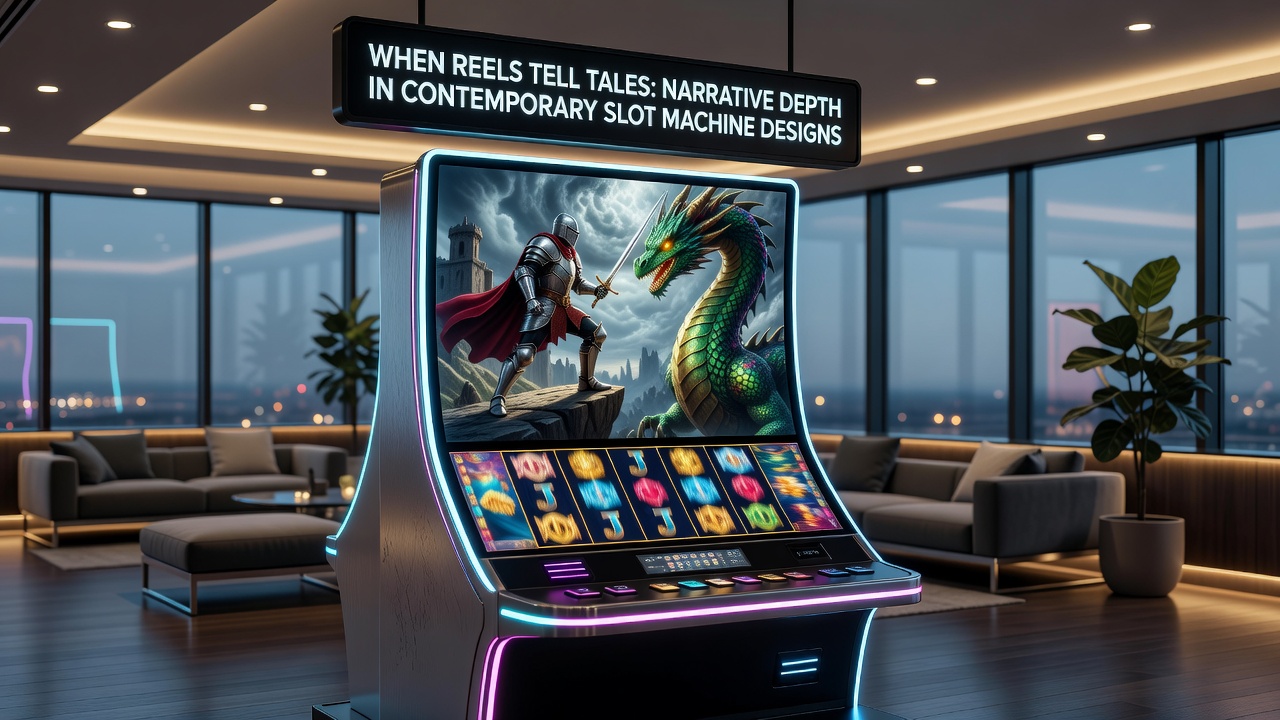
Multiple developers now license established intellectual properties from film and literature, then expand the source material with original subplots that fit reel constraints, and these expansions maintain canonical consistency while introducing new conflicts resolved through bonus rounds. In August 2026 several studios debuted titles that adapt lesser-known graphic novels, using panel-to-reel translations where each reel stop corresponds to a comic frame that advances the page when specific combinations appear.
Environmental Storytelling and World Building
Background layers and foreground overlays function as active story participants rather than decorative elements, shifting perspective or revealing hidden details when certain reel states activate, and this technique draws from established practices in interactive fiction. Studies published in the Journal of Gaming and Virtual Worlds document how parallax scrolling and particle effects now communicate spatial relationships that support the central narrative, allowing players to infer location changes without explicit text prompts.
Modular narrative components let studios update story branches seasonally without rebuilding entire games, so limited-time events introduce new characters or conflicts that integrate with existing mechanics, and players returning after updates encounter altered opening sequences that reflect timeline progression. Regulatory bodies in multiple jurisdictions, including those in Canada and parts of Europe, have reviewed these dynamic systems to ensure transparency in how features unfold, yet the core design principle remains focused on narrative cohesion.
Future Directions in Narrative Integration
Developers continue testing AI-assisted dialogue generation that personalizes minor story beats according to play patterns, although these systems currently operate within predefined narrative guardrails to preserve overall coherence, and early implementations have appeared in select markets during 2026. The same University of Nevada research team tracking these trends projects further convergence between slot engines and branching narrative tools used in mainstream video games, particularly as cross-platform account systems mature.
Conclusion
Slot machine narratives now operate as structured sequences rather than thematic window dressing, with mechanical systems supporting plot advancement and character evolution across extended play periods. Industry reports from organizations such as the Canadian Gaming Association confirm that this design direction has expanded the creative scope available to development teams while aligning with broader entertainment media conventions. As hardware and software capabilities advance, the boundary between reel-based entertainment and interactive storytelling continues to narrow through deliberate architectural choices rather than isolated visual upgrades.